 CONSULTING · TRAINING · COACHING
Reflections on production and people following a visit to Japan
First published: · Updated:
As technology rapidly changed the world, I asked myself as an engineer: are we missing something? To seek an answer through my own observations, I travelled to Japan in February 2020.
The programme included Smart Factory, Robotics and Wearable Technology exhibitions, visits to the Panasonic Innovation Center and NTT Docomo R&D Center, an IoT and Kaizen seminar, and a tour of Subaru’s Yajima factory.
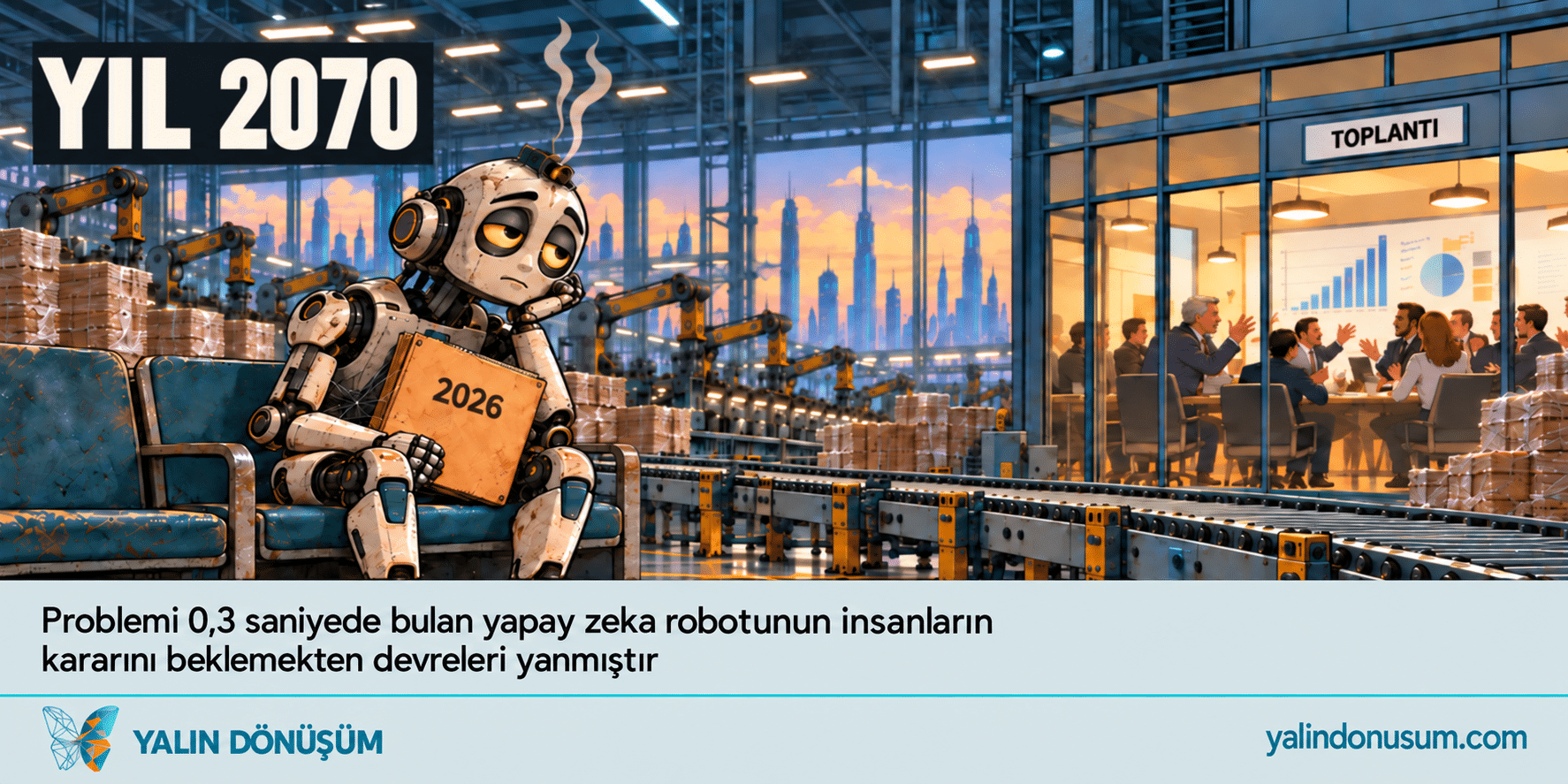
I had other questions too. Were we entering an era of lights-out factories using very little human labour? Would we begin living like the Jetsons? What would people’s role be as robots took over many tasks?
These questions cannot all be explained through one technology. First, we need to distinguish two concepts often discussed together.
The difference between Industry 4.0 and Society 5.0
The concept of Industry 4.0 emerged in Germany in 2011. Its central themes include interconnected machines, products and information systems in manufacturing, and the use of data to monitor and improve processes. [3]
Society 5.0, introduced by Japan in 2016, is a vision of society extending beyond manufacturing. It aims to address economic development together with social challenges through digital technologies. [1]
It is therefore inaccurate to say that Japan simply gave Industry 4.0 another name. Industry 4.0 focuses on industrial value creation and connected production systems, while Society 5.0 also considers how the same technological possibilities serve people’s lives. This distinction does not mean Industry 4.0 excludes people.
Developments that enable the technology
Smaller sensors and processors, improved connectivity and more accessible data processing have opened the way to different applications. Devices that previously worked separately can now share information. [2]
Yet a technology being accessible does not mean it is the right investment for every business. Selecting devices or software without knowing which production loss we want to reduce may leave us operating an expensive system with the same problems.
For example, installing a faster machine at a station constantly waiting for material does not automatically remove the cause of the wait. First we must understand why materials do not arrive on time. Digital monitoring helps to the extent that it makes this cause visible and enables an appropriate response.
Its connection with sustainability
During the Japan programme, I noticed the visibility of the Sustainable Development Goals logo at exhibitions and company visits. I valued technology discussions being considered alongside social needs.
The United Nations’ 17 Sustainable Development Goals were adopted in September 2015 and came into effect on 1 January 2016. [4] This distinction in dates matters. Society 5.0 should also be understood as Japan’s policy vision, not a UN programme.
Back on the production floor
For me, the practical meaning of this discussion is matching technology to the right problem. First, define the loss, observe the current state on site and understand employees’ experience. Then decide which information is missing and which tool can provide it.
When evaluating a system, alongside learning its features, we should ask: which production problem will this investment solve, and how will we know?
Sources
[1] Cabinet Office of Japan · Society 5.0
[3] acatech · 2021 Annual Report · Industrial value creation