 CONSULTING · TRAINING · COACHING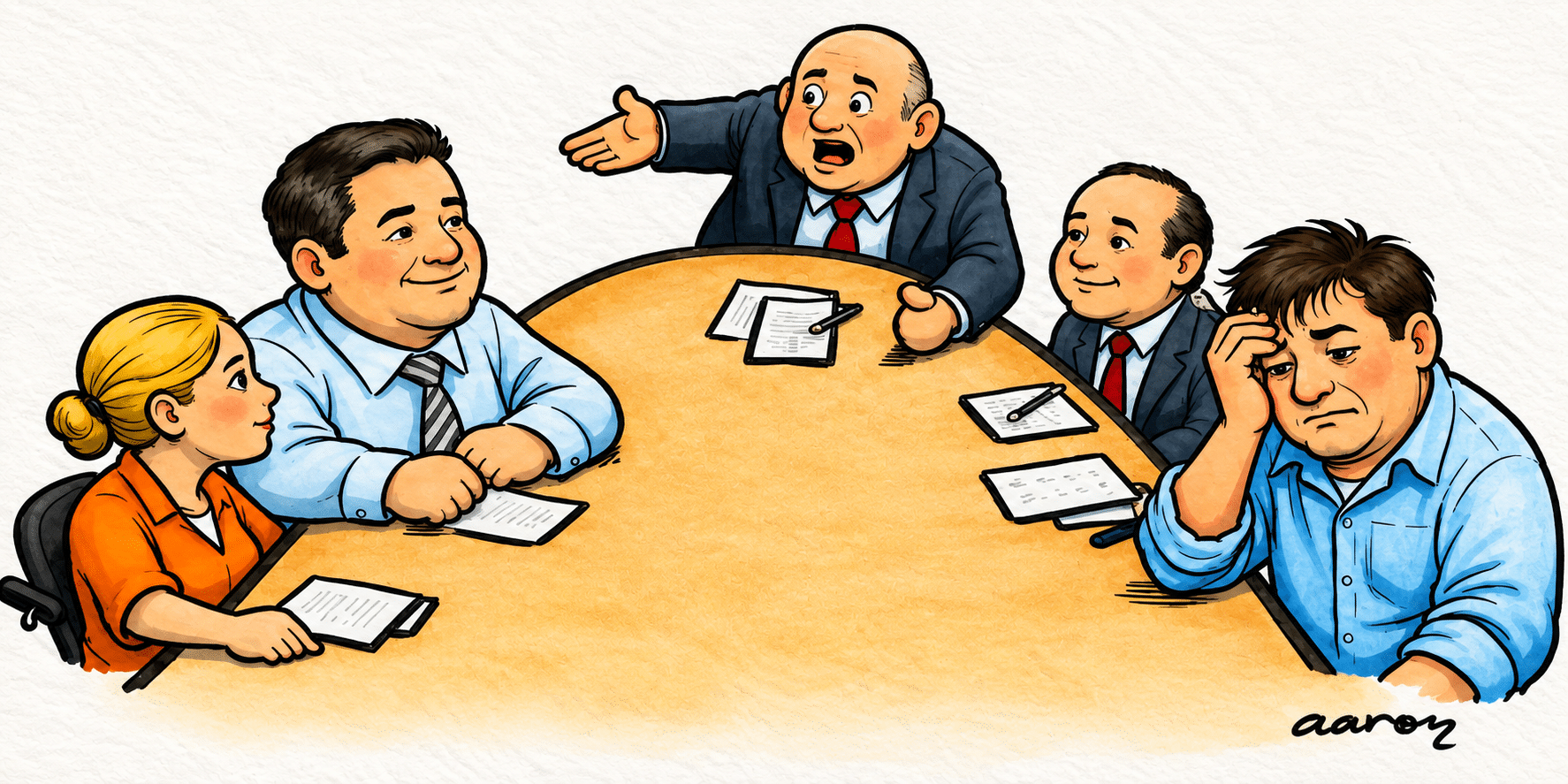
(These are long-established Turkish expressions, used here figuratively.)
We talk about continuous improvement and a problem-solving culture. There is kaizen in presentations and on boards…
But what happens on the shop floor is often very different.
Problems are not contained. They are not analysed.
Instead of looking for the root cause, the problem is passed to someone else.
“I cannot solve it; I need someone.”
“If they did their job properly, this problem would not exist.”
The problem is not solved; it changes hands.
Responsibility flows from one person to another, down towards the bottom.
After a while, the inevitable ending arrives:
Everyone starts blaming everyone else.
Nobody looks at the system.
Nobody questions their own contribution.
Kaizen means pausing to think about the problem.
Instead, we send the problem to someone else without stopping to address it.
We throw it like a boomerang; eventually it comes back and hits us on the head.
Then what happens? The quietest person, the one with the least power, gets bitten by everyone.
How does a true kaizen culture break this cycle?
Make the abnormality visible: Andon
Andon is a visual or audible signal that reports an abnormality and calls for support. Not every signal means the entire line stops immediately. In a defined system, if the problem cannot be resolved within the cycle, the line may stop at a designated stopping point. Rules for stopping and restarting in situations affecting safety or quality must be clear. [1]
Make ownership of follow-up clear
Let us appoint someone to coordinate the definition, analysis, action follow-up and closure of a problem. Rather than simply writing “Maintenance” or “Quality,” assign a named person responsible for follow-up. This does not mean that one person must solve the problem or carry all responsibility; solving it is a team effort.
Investigate causes using evidence
Let us try to understand what happened and why the system allowed it. The 5 Whys supports questioning; proposed causes must be tested through observation and data. A3 is a problem-solving approach connecting the problem definition, current state, target, countermeasures and follow-up.
Verify that the solution is sustained
Let us add the successful method to the standard and teach it to the relevant people. A problem not appearing the following day is not, on its own, evidence of a permanent solution. Check for recurrence over an appropriate monitoring period, under comparable operating conditions and using outcome indicators.
Daily follow-up
Asakai supports tracking open actions and new deviations. Necessary initial measures should be taken promptly; separate work, an owner and a date should be agreed for thorough analysis. Every problem may not close the same day, but none should be left without an owner.
If we continually pass a problem to someone else, what changes hands is responsibility. Even sending it by registered post will not fix that…