 CONSULTING · TRAINING · COACHING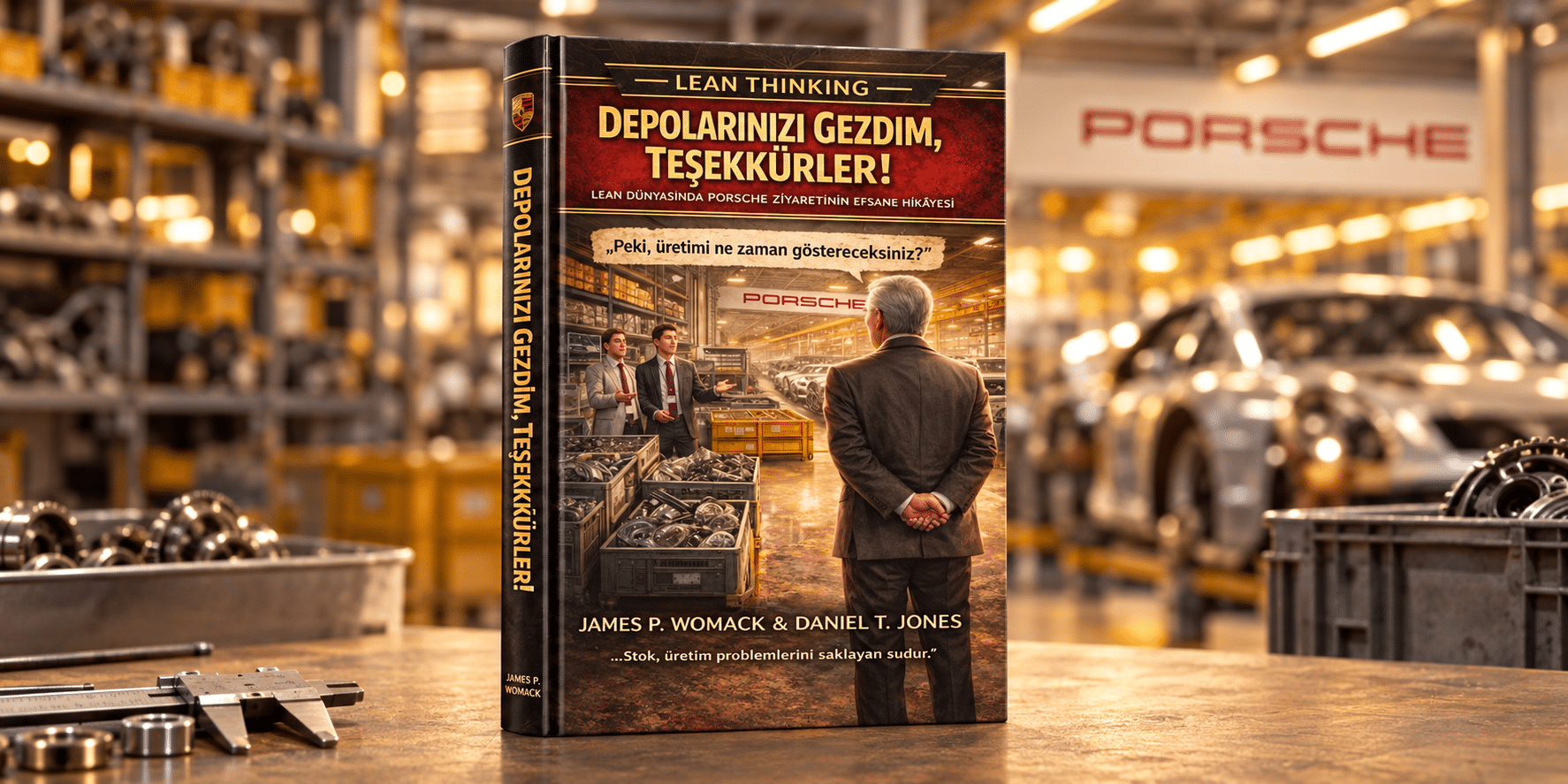
We are touring the production area. The racks are full, work-in-process surrounds the stations and parts awaiting the next operation line the aisles. At first glance, we see a great deal of activity. But can we see the flow?
To describe this situation, imagine an illustrative dialogue. The host asks proudly, “How did you find our factory?” The visitor replies, “We toured your warehouses, thank you. When will you show us production?”
I use this as an analogy for confusing inventory with production flow. It is not a verified quote from a named manager at a particular company.
Seeing many parts is not the same as seeing good flow
A large amount of work-in-process may make capacity utilisation look strong. But if parts wait a long time between operations, their journey to the customer may also be lengthening. We should ask both “How many did we produce today?” and “Where is an order waiting, and why can it not move forward?”
Inventory can mask the impact of some fluctuations. Breakdowns, long setup times, unbalanced work or unreliable supply may remain hidden for a while behind high inventory.
Improve the system as we reduce inventory
This does not mean “Let us remove all inventory immediately.” Cycle stock, stock covering variability and needs arising from supply conditions should be assessed separately. Randomly cutting inventory without improving process reliability can put deliveries at risk. [1]
We can select a product family and measure current inventory, waiting times and replenishment arrangements. Then we can reduce a specific loss and review inventory levels in a controlled way. We need to proceed while monitoring delivery, quality and downtime.
For me, the significance of a factory’s size lies in how reliably its flow meets customer needs.
The illustration represents the article’s narrative; it is not a book page or documentary evidence of a historical event.